Collection: Matériel de fabrication de bougies

Livraison gratuite au Royaume-Uni continental

Expédition le jour même*

87 produits

Filtrer et trier

Affichage de 87 produits sur 87

Pourquoi choisir The Soapery ?

  • Livraison gratuite au Royaume-Uni (continent)

    Procurez-vous rapidement vos ingrédients sans frais supplémentaires.

  • Expédition le jour même*

    Commandez avant 15h pour que votre colis soit envoyé le jour même.

  • Prix bas

    Pas de marketing clinquant ni de fausses promesses se traduit par de grandes économies.

  • Fournisseurs éthiques

    Aucun scrupule ici. Nos ingrédients proviennent de sources éthiques et durables.

À propos de Matériel de fabrication de bougies

Illuminez votre répertoire créatif grâce à notre sélection d'ingrédients pour la fabrication de bougies et de fondants parfumés. De la cire écologique aux parfums et au-delà, nous avons tout ce dont vous avez besoin pour obtenir une combustion parfaite (et l'arôme qui va avec) !

Bienvenue dans le monde des bougies faites à la main

Qui n'aime pas les bougies ? Encore mieux – une bougie fabriquée à la main avec amour et soin ? Nos fournitures de fabrication de bougies peuvent être utilisées pour créer des bougies en récipient, des fondants parfumés et des bougies piliers. Nos cires naturelles sont une excellente alternative à la cire de paraffine.

Des chefs-d'œuvre en pots Mason aux mèches de bougies et au-delà, il existe un projet de fabrication de bougies pour chacun – et nous avons les fournitures parfaites pour vous permettre de fabriquer vos propres bougies !

Donner vie à votre vision de bougie est un jeu d'enfant – des mélanges de cire d'abeille et des créations écologiques à base de soja aux fondants parfumés intenses.

Alors, pourquoi ne pas commencer ? Faites le plein ou démarrez avec la gamme de fabrication de bougies de The Soapery. Provenant des meilleurs fournisseurs d'ingrédients au monde, emballée avec soin et expédiée directement à votre porte, notre collection de fabrication de bougies est tout simplement incontournable ! De plus, notre approche sans fioritures vous aidera à maintenir vos coûts bas et la qualité de vos produits élevée !

Les ficelles de la fabrication de bougies et de fondants parfumés : nos conseils

Il n'est pas surprenant que la fabrication de bougies soit si populaire auprès de nos créateurs ; après tout, allumer une bougie ou placer un fondant parfumé sur un brûleur est la meilleure façon de se détendre. Mais comment transforment-ils leurs ingrédients bruts en produits parfaitement finis ? Nos experts ont l'information. Prêt pour un aperçu ?

Pour commencer, familiarisons-nous avec les bases. Ces créations de fabrication de bougies sont relativement simples à maîtriser pour les débutants ; tandis que les bougies contiennent de la cire et des mèches, les fondants parfumés sont autonomes. Pour fabriquer l'un ou l'autre, vous devrez décider si vous voulez utiliser une mèche ou non, choisir une cire, et vous procurer quelques éléments supplémentaires comme des huiles parfumées, des colorants, des moules et des récipients.

Notre meilleur conseil ? Que ce soit votre première fois en fabrication de bougies ou que vous en fassiez depuis des années, amusez-vous avec les cires ! Bien qu'elles puissent sembler similaires, ces ingrédients de base essentiels possèdent toute une gamme de qualités qui influencent tout, du point de fusion et de la durée de combustion au parfum. Donc, si vous êtes un connaisseur de la cire de candelilla, pourquoi ne pas essayer le soja ? Ou découvrez pourquoi la cire d'abeille est si en vogue ces derniers temps ?

Avec un peu de pratique et de patience, vous deviendrez un pro de la fabrication de fondants parfumés et de bougies en un rien de temps !

CE QUE DISENT NOS CLIENTS

Nous accordons de l'importance à chacun de nos clients

Accréditations/Récompenses

Nous nous engageons à offrir une vaste gamme de produits entièrement naturels et biologiques certifiés par la Soil Association, et nous sommes fiers de contribuer à la protection de notre environnement.

Comme la plupart des ingrédients, les huiles, beurres, poudres et décorations de vos produits faits à la main sont cultivés ou extraits du monde naturel. Ceux qui sont certifiés biologiques par la Soil Association ont été cultivés, produits et récoltés conformément à des réglementations strictes visant à protéger et à maintenir l'environnement, y compris les sols, les écosystèmes, les animaux et les personnes.

Acheter Matériel de fabrication de bougies : FAQ

Vous ne trouvez pas les réponses que vous cherchez ? N'hésitez pas à contacter notre équipe à l'aide de notre formulaire de contact ou sur les réseaux sociaux. Nous serons ravis de vous aider.

Is candle making easy?

Candle making is a process that's simple enough for beginners to enjoy, but with room for creativity as you get more experienced. 

The basics involve melting wax, adding your favourite scents and colours, and setting a wick. It might take a little practice to get everything just right, like a smooth finish or the perfect fragrance balance, but that's all part of the fun! The right recipe should set you on the track for success, so be sure to browse before you begin! 

The Soapery offer all the supplies and advice you’ll need to start your candle journey, from wax bases to colouring agents and beyond.

How long does candle wax take to harden?

Candle wax hardening times depend on a few factors, including the type of wax used, size and shape of the candle, and temperature and humidity of the environment it’s stored in. For this reason, it can take anywhere from a few hours to several days for candle wax to harden completely.

If hardening/setting times are high on your priority list, we recommend exploring every wax base option before jumping into candle making. Soy wax, for example, tends to take longer to harden, often taking several days to fully set, whilst beeswax tends to harden more quickly.

It's important to allow your wax to fully harden before attempting to use or handle your candle, as it will be more prone to damage if it is not fully set.

How much candle wax is needed to make a candle?

The amount of wax you’ll need to make a candle depends on a few factors, including your chosen wax type, and of course, your final vision for size, shape, and overall design.

To determine how much wax you'll need, our experts recommend using the average density candle-making formula. First, measure the volume of your container. This could be, for example, 300ml. Multiply this by your chosen wax's average density (typically around 0.85 for many waxes) to estimate the amount of wax required. In this example, you'd need approximately 300ml × 0.85 = 255 grams of wax.

If you're adding fragrances, remember that they can account for about 6-10% of your candle's total weight. This will reduce the wax amount you'll need proportionally.

With this being said, it's always a good idea to have a little extra wax on hand in case you need to make adjustments or make a mistake while pouring the wax.

Which candle wax is best?

There’s a long list of candle waxes available online, from paraffin to beeswax. Whilst each and every option has its own pros and cons, our candle-making enthusiasts recommend natural options above all else. Here are just a few of their favourites: 

Soy wax: This is a natural wax made from soybeans. It’s biodegradable and burns cleanly, making it a popular choice for environmentally conscious candle makers and buyers alike. 

Beeswax: This natural option is used by bees to build their honeycomb. Its high melting point, clean burn, and natural, honey-like scent make it a brilliant choice for candle making. 

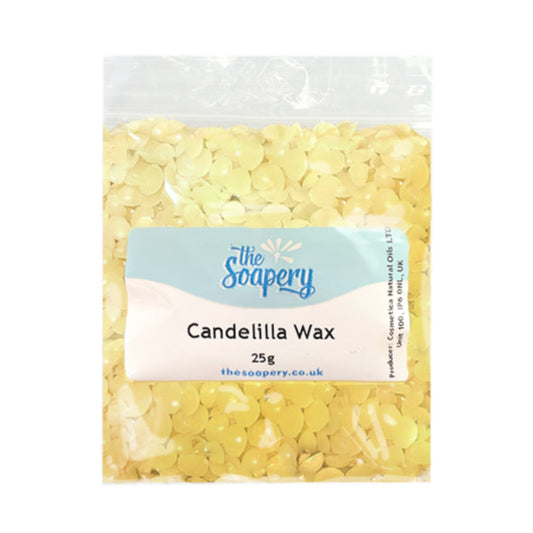
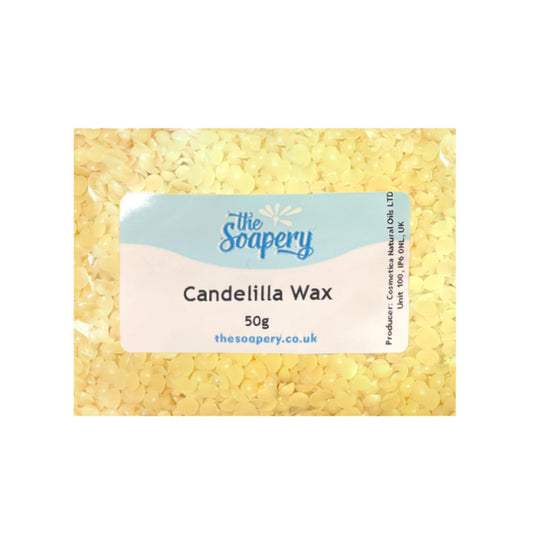
Candelilla wax: Candellia wax is a classic natural candle making option derived from the leaves of the Candelilla shrub, native to Southwestern United States and Northern Mexico. Its high melting point and creamy, opaque appearance make it an ideal choice for decorative pieces, absorbing colour with ease.

What can I make with beeswax?

Beeswax has been a valuable ingredient in candles and cosmetics for hundreds of years thanks to its unique properties, including its ability to form a water-resistant barrier and pleasant, honey-like scent. Our makers love using this ingredient in:

Candles: Beeswax candles are long-lasting, burn cleanly, and produce a pleasant, natural scent. They can be made by melting beeswax and pouring it into moulds or by rolling beeswax sheets around a wick.

Lip balm: Beeswax is a natural humectant, meaning it can be used in products like lip balm to lock in moisture.

Skincare products: Beeswax can be used to make lotions, creams, and other skin care products requiring a moisturising formula, providing both hydration and protection.

What is soy wax?

Soy wax is one of the most popular options for candles and wax melt making at the moment! In short, it’s a natural alternative to traditional paraffin wax, derived directly from soybeans. This makes it sustainable - but the benefits don’t end there. 

Soy wax is widely known for its eco-friendly nature - being fully biodegradable - but it’s also an excellent choice in terms of safety and general performance. Its lower melting point helps it burn more cleanly than other waxes, and last longer. Not to mention, it’s easier to clean up once your candle is finished or in the event of any spills!

What wax is best for wax melts?

When it comes to choosing a base for your wax melts, it’s important to consider two main factors - meltability, and fragrance throw. After all, it’s important to ensure your final products perform as well as possible!

Our makers tend to prefer using soy max for wax melts in particular – though beeswax and other blend waxes can be used. This sustainable, safe option is a general favourite for many reasons - primarily its low melting point (meaning longer-lasting melts) and easy clean-up (perfect for both making and use). 

With this being said, the benefits don’t end there. Wax melts are all about the scent - aiming to envelop rooms and whole homes in beautifully balanced fragrance blends. Soy wax allows wax melt creators to create this very effect - as it’s able to hold and distribute scent, particularly essential oils, very well. So, go ahead, give soy wax a try and discover the melt-making magic it can bring to your creations.

How to scent wax melts?

Scent is one of, if not the most important element of wax melts. Beyond unique shapes and gorgeous colours, you’ll need to ensure you choose just the right fragrance, and distribute it well enough for the optimum level of scent throw once your final creation is melted. But how?

Most wax melt recipes will require you to melt down your chosen wax on a low heat before adding additional ingredients, including colour, botanicals, and, of course, fragrance. Our experts highly recommend using essential oils for this part of the process - not only are they all-natural, but brilliantly potent, meaning you’ll only need to add a drop or two! Whether you choose lavender for a serene scent experience or peppermint for refreshing invigoration, the possibilities are endless.

From there, simply mix, pour into your mould, and set!

How to colour candles?

Whilst your candle fragrance and container are huge parts of the final product, colour provides an extra customisation option!

Want to take your candles to the next level? Once you’ve selected your wax (ensure it holds colour well and will burn evenly), you’ll be able to select a colourant option. Be careful here - many pigments and colouring options perfect for other cosmetic and home creations will negatively impact candle burn, safety, and stability - meaning mica and regular food colouring are off the cards in most contexts. Why not try a liquid dye approved and specifically made for candle-making?

Remember - a little goes a long way, so be sure to start with a small amount of dye, slowly building up until you reach your desired shade

What is candelilla wax?

Candelilla wax is a natural, hard wax derived from a small shrub native to parts of Mexico and the US. It's used in all sorts of things, including cosmetics and candles.

In cosmetics, candelilla wax is used as a thickening agent and emollient - or to create a protective, moisture-locking barrier on the skin. 

In candles, it makes an excellent base thanks to its high melting point, opaque, creamy colour, and long burn time.